Next.js and Sanity Metadata Workflows for AI-Era Search
A Next.js and Sanity metadata workflow for AI-era search: query seoFields once, render metadata server-side, validate previews, and keep editors in control.
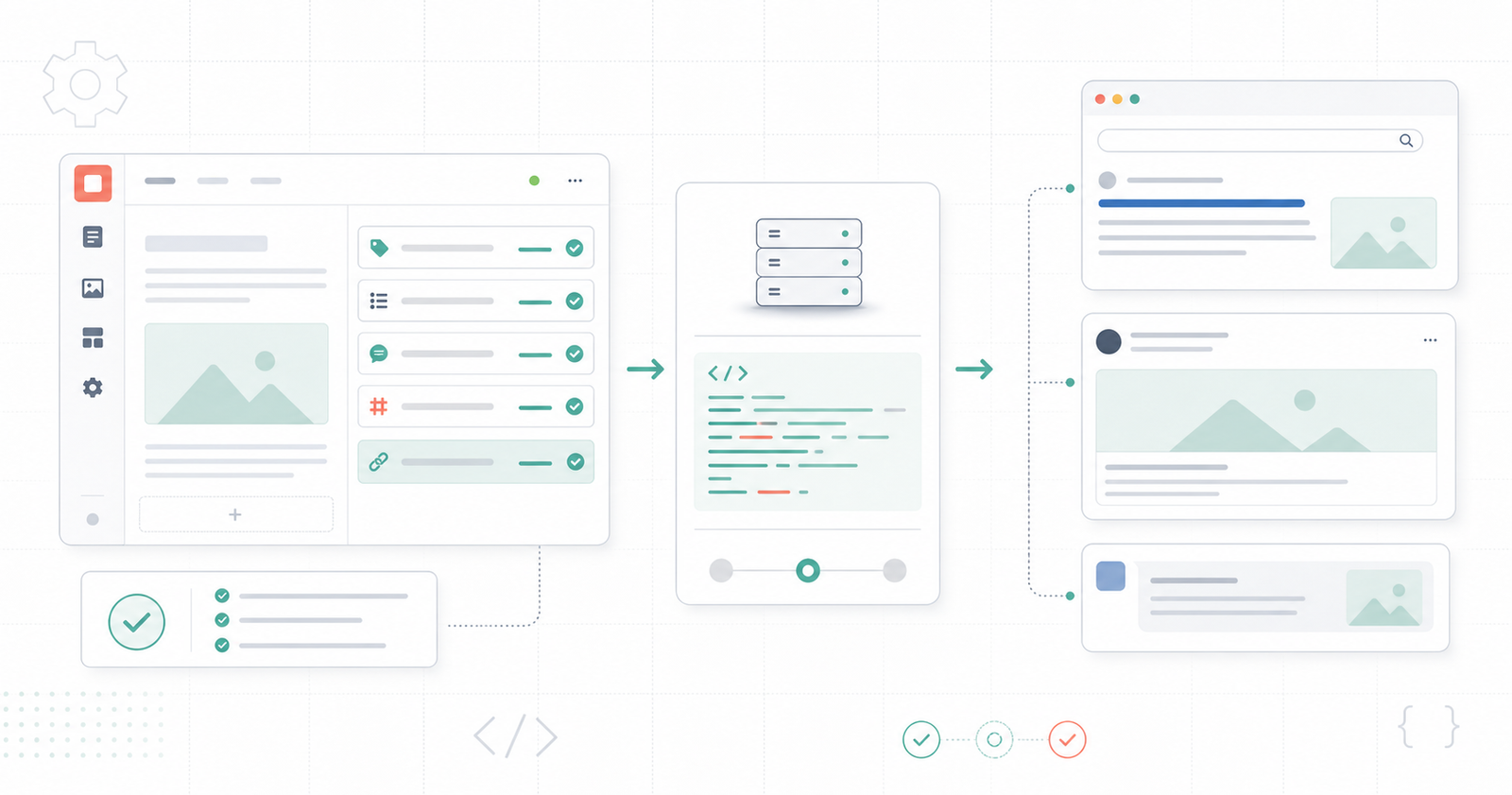
The best Next.js and Sanity SEO workflow is boringly reliable: query the SEO object once, render metadata server-side, resolve images to absolute URLs, output canonical and robots rules, and keep the Studio preview aligned with the frontend.
AI-era search raises the stakes because metadata is no longer only about blue links. It contributes to page understanding, link previews, answer snippets, AI Overview eligibility, social sharing, and content QA before publishing.
Start in the schema
Add seoFields to every Sanity document type that can publish to a URL. Pages, posts, docs, guides, products, use cases, and landing pages should not each invent a separate metadata shape.
A shared object makes the frontend easier to maintain. It also makes dashboards, validation, field groups, permissions, and editor training more consistent.
Query the full SEO contract
Your GROQ query should fetch title, description, canonicalUrl, metaImage, keywords, robots, Open Graph, Twitter/X, hreflang, and any custom meta attributes you support. Missing one field in the query is one of the easiest ways to make editors think the plugin is broken.
Render metadata on the server
In Next.js App Router, generateMetadata is the natural place to map Sanity SEO fields into the Metadata object. sanity-plugin-seofields provides buildSeoMeta() so the mapping stays predictable across titles, descriptions, canonical URLs, robots settings, Open Graph, Twitter cards, and hreflang alternates.
For Astro, Nuxt, Vue, SvelteKit, Remix, or custom renderers, use buildSeoHead() to produce plain head tag data. The idea is the same: Sanity owns the editable values, and the frontend owns final rendering.
Make images and URLs absolute
Search systems and link unfurlers need absolute URLs for canonical links and social images. Resolve Sanity image assets through an image URL builder, provide 1200 by 630 social images where possible, and use a generated Open Graph fallback only when no editorial image exists.
Close the loop with previews and scoring
A good workflow gives editors live previews in Studio and gives content leads a dashboard across the dataset. The preview catches page-level issues. The dashboard catches patterns: missing descriptions, duplicated titles, noindex mistakes, weak Open Graph images, or content types without structured data.
The AI-era workflow
Treat metadata as a publishing system, not a final polish step. Model it in Sanity, render it in Next.js, validate it before publishing, and monitor it after publishing. That is the workflow that keeps SEO, AEO, GEO, and social previews moving together.