10 Common Sanity SEO Mistakes and Fixes
Find the most common Sanity SEO mistakes, from missing metadata to weak structured data, and learn practical fixes for each one.
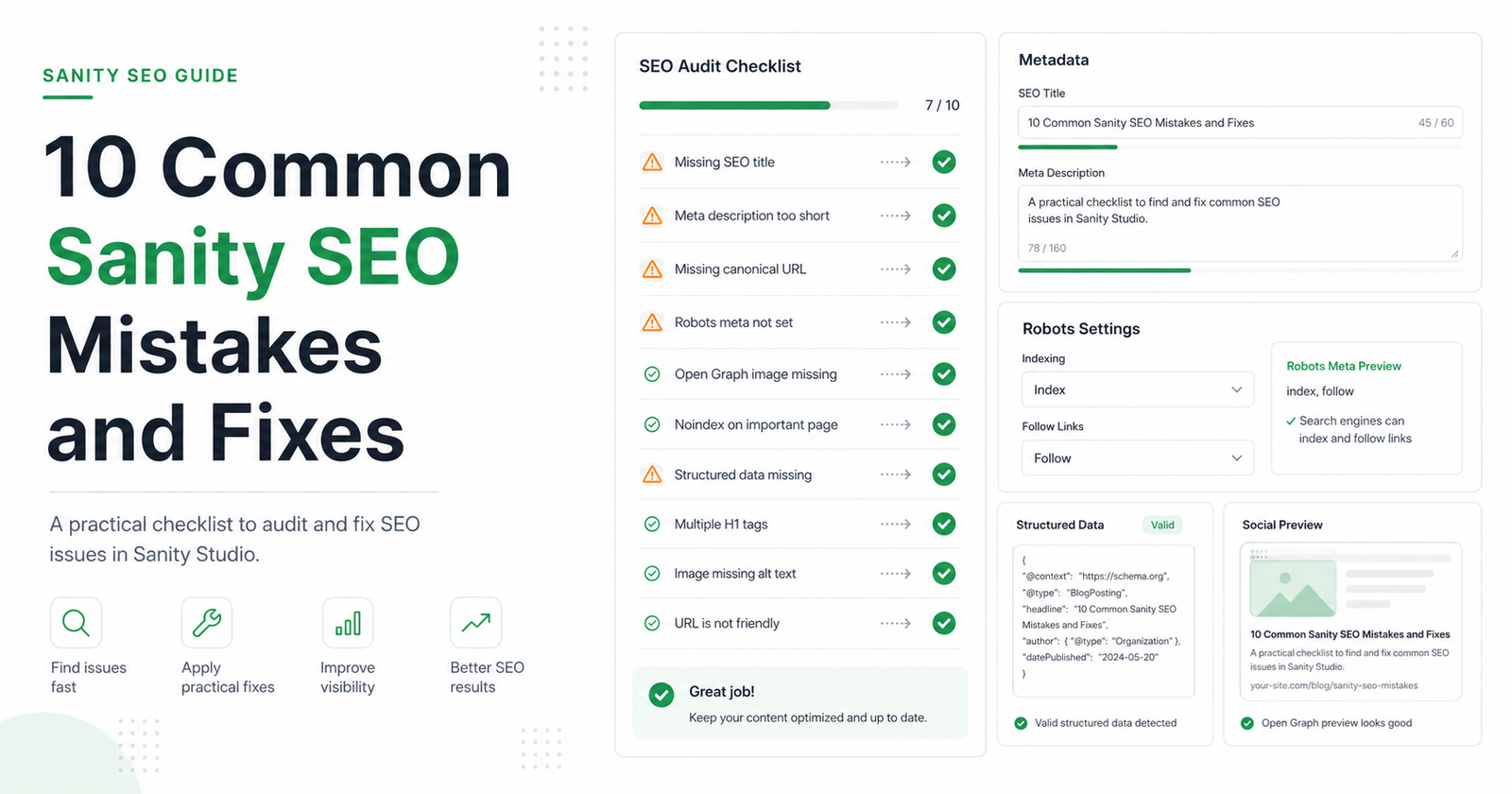
Most Sanity SEO problems are not caused by one dramatic technical failure. They usually come from small gaps that repeat across pages: missing descriptions, copied titles, generic social previews, stale structured data, and frontend queries that forget to render the fields editors filled in.
The good news is that these mistakes are fixable. Once you know the pattern, you can improve the schema, the editor experience, and the frontend rendering path so the same problem does not keep returning.
1. SEO fields are not added to every public document type
A blog post has metadata, but a product page or guide does not. That creates uneven search quality across the site. Fix it by adding the same SEO object to every document type that publishes to a URL.
2. The frontend does not render the SEO object
Editors can fill the perfect fields in Studio, but nothing changes if the frontend query ignores them. Fix this by querying the SEO object and mapping it into your framework metadata API, including Open Graph and robots settings.
3. Titles are copied from page headings without review
The H1 and meta title can be related, but they do different jobs. A heading can be expressive. A title tag has limited space and must work in search results. Fix this by giving editors a title preview and clear length guidance.
4. Meta descriptions are generic
A description like Learn more about our solution wastes an opportunity to explain the page. Fix it by writing a unique summary that states who the page is for, what it covers, and why it is useful.
5. Social previews rely on accidental images
If no Open Graph image is set, platforms may use a random image or none at all. Fix this with explicit social image fields and a fallback chain that ends with a generated image endpoint.
6. Robots controls are hidden or misunderstood
A noindex setting on the wrong page can remove important content from search. Fix this by making robots controls visible, labeling them clearly, and including robots status in SEO health checks.
7. Canonical URLs are missing on duplicate-like pages
Campaign pages, filtered pages, and syndicated content can create duplicate signals. Fix this with a predictable canonical URL strategy and editor override fields where the default route is not correct.
8. Structured data is hardcoded and forgotten
Hardcoded JSON-LD often starts accurate and then drifts. Fix this by modeling structured data in Sanity when the facts are editorial, and generating the final JSON-LD from current document data.
9. SEO checks happen only after publishing
Post-publish audits are useful, but they are late. Fix this with Studio previews, field validation, and an SEO dashboard that helps editors resolve issues before content goes live.
10. Teams fix pages but not systems
If the same problem appears across many documents, the system is asking for a better default. Fix recurring issues with schema changes, better initial values, clearer field descriptions, frontend fallbacks, or dashboard scoring.
Sanity SEO improves fastest when teams look for patterns. Fix the document, then fix the reason the document failed. That is how a flexible content model becomes a reliable publishing system.