Entity-First Schema.org in Sanity for AEO and AI Answers
Learn how to model entity-first Schema.org data in Sanity so articles, products, apps, organizations, and FAQs are easier for search and AI systems to understand.
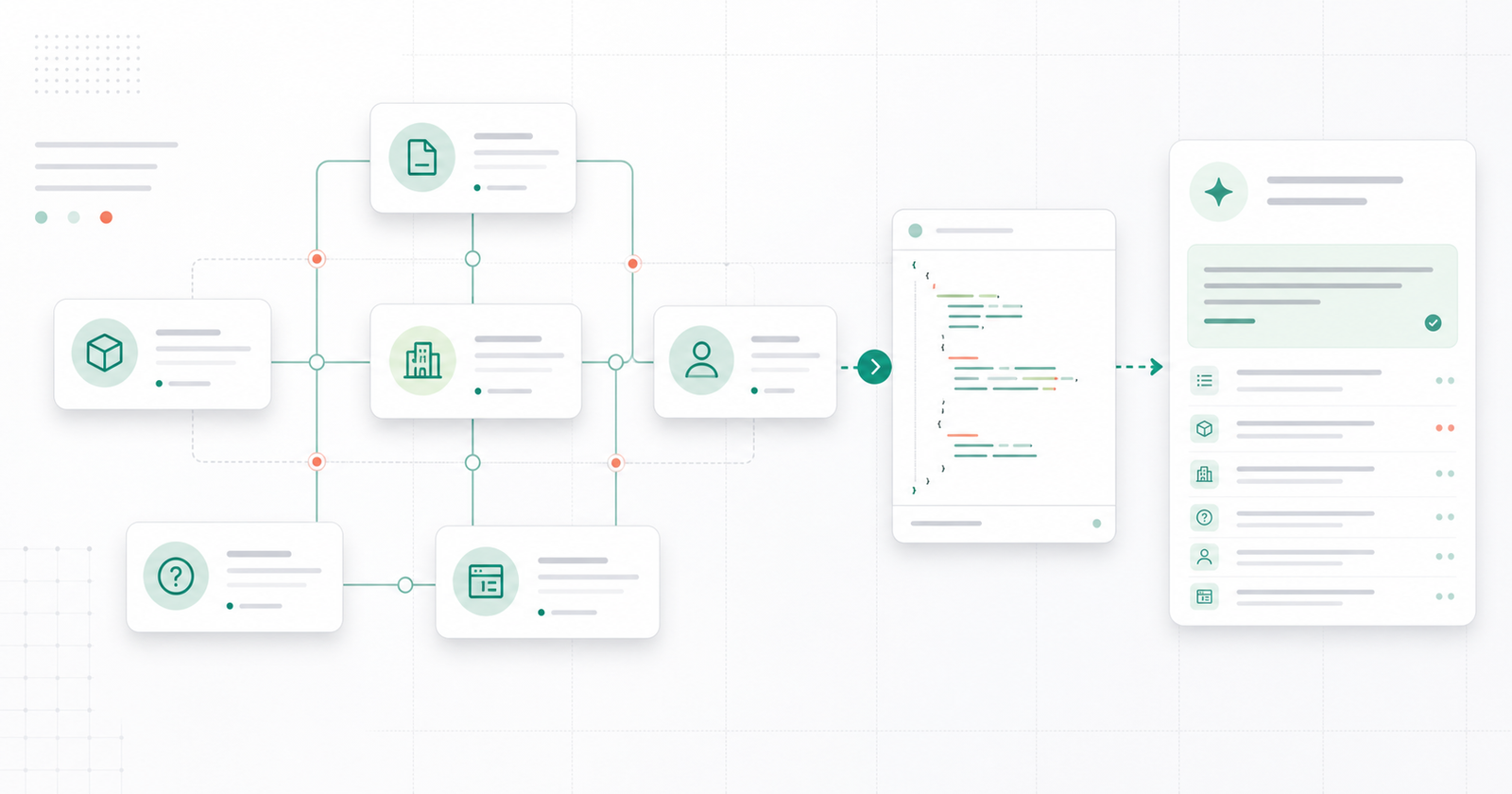
Entity-first SEO means the page is not treated as a blob of text. It is treated as a clear thing: a blog post, product, software app, organization, person, FAQ, local business, course, review, or service.
That is exactly where Sanity and Schema.org fit together. Sanity stores the facts as structured content. Schema.org gives those facts a vocabulary. The frontend renders JSON-LD from the same data users can see on the page.
Why entities matter for AEO
Answer engines need confidence. A page that says what it is, who created it, when it changed, what organization published it, and which facts it contains is easier to interpret than a page with generic metadata and no structured relationships.
Structured data does not guarantee visibility, but it reduces ambiguity. It helps search systems connect the page to known concepts, rich result eligibility, authorship, product facts, and the visible content users read.
Start with page intent
- Use BlogPosting or Article when the page is editorial content with an author and date.
- Use SoftwareApplication for a plugin, app, or tool page where features, pricing, and application category matter.
- Use FAQPage only when the page includes visible question-and-answer content.
- Use Organization, Person, ProfilePage, LocalBusiness, or Service when the page is mainly about a real entity.
Model facts editors can maintain
A good Schema.org model should ask editors for facts they understand: headline, description, author, publisher, date, image, price, rating, address, question, answer, or step. It should not ask editors to manage values that the frontend can compute, such as canonical page URL or image asset URL.
sanity-plugin-seofields ships Schema.org schema types, preview components, React components, and JSON-LD builder helpers so teams can keep structured facts close to the content instead of hardcoding snippets in templates.
Use graphs for richer pages
Many pages are not one entity. A blog post might also need WebPage, BreadcrumbList, Organization, and Person data. A software product page might need SoftwareApplication, Offer, Organization, and FAQPage. Combining related items in JSON-LD gives machines a more complete map of the page.
AEO is a content modeling problem
The sites that win in answer surfaces will not be the ones with the most markup. They will be the ones whose content model makes important facts trustworthy, current, and reusable across pages, search results, AI assistants, and product experiences.