AI Search Readiness for Sanity Sites: A Practical GEO Checklist
A practical GEO checklist for Sanity sites: indexable pages, answer-ready metadata, structured data, images, internal links, and editor workflows.
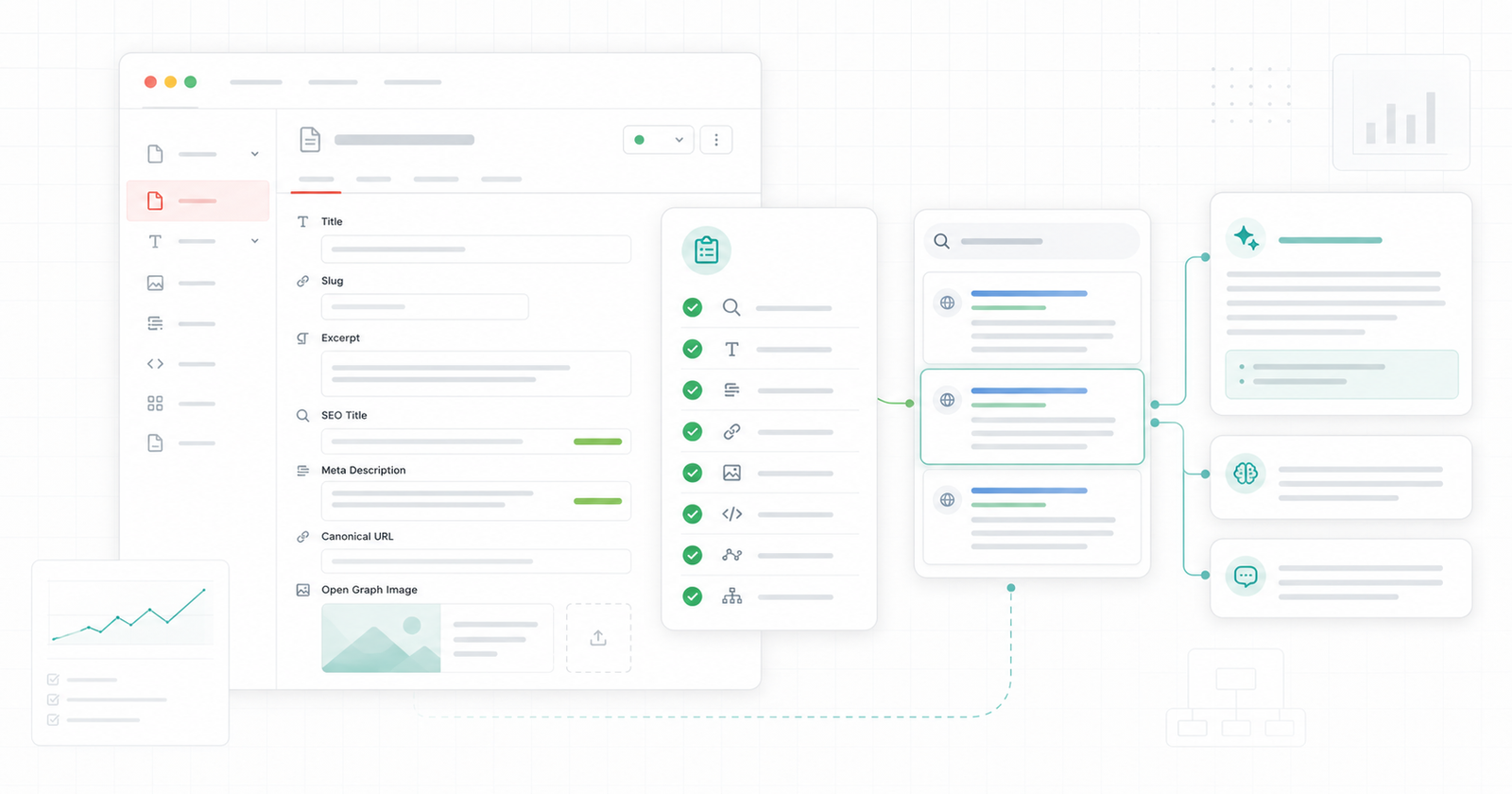
AI search readiness for a Sanity site is not a separate hack from SEO. It is the discipline of making every important page indexable, understandable, answer-ready, and easy to cite across search results, AI Overviews, answer engines, and human sharing surfaces.
The practical version is simple: model the right fields in Sanity, give editors feedback before publish, and render the metadata and structured data reliably in the frontend.
What changed with AI search
Search is moving from matching pages to answering tasks. Google AI Overviews, AI Mode, ChatGPT, Perplexity, and Bing Copilot all reward pages that make the answer obvious, expose clear entities, and provide supporting context that machines can parse.
That does not mean stuffing pages with artificial keywords or invisible schema. It means making the visible page stronger: direct explanations, specific headings, fresh dates, credible authorship, relevant images, and structured data that matches what users can actually see.
The Sanity GEO checklist
- Keep the page indexable. A noindex page cannot become a useful supporting source in search or AI-generated results.
- Write an answer-ready description. The meta description should summarize the page in plain language, not merely tease the content.
- Set a focus keyword or topic. Editors need one primary intent so titles, descriptions, headings, and internal links point in the same direction.
- Add a strong meta or Open Graph image. AI search still uses classic web signals, and high-quality visual support helps both search previews and social distribution.
- Use Schema.org only where it describes visible content. Article, BlogPosting, FAQPage, Product, Organization, WebPage, and SoftwareApplication are useful when they match the page.
How sanity-plugin-seofields helps
The plugin turns GEO from an abstract marketing term into fields editors can actually use: title, description, focus keyword, keywords, canonical URL, robots settings, meta image, Open Graph, Twitter/X cards, hreflang, and Schema.org helpers.
A repeatable workflow
Start each important page with one search intent. Fill the SEO fields while the content is being drafted, not after it is approved. Use the GEO Checklist and SEO Health Dashboard to catch missing descriptions, accidental noindex settings, weak social previews, and missing structured data before publishing.
The best GEO work is boring in the right way. Every document has a clear purpose, every page renders the same metadata contract, and every editor can see whether a page is ready before it goes live.